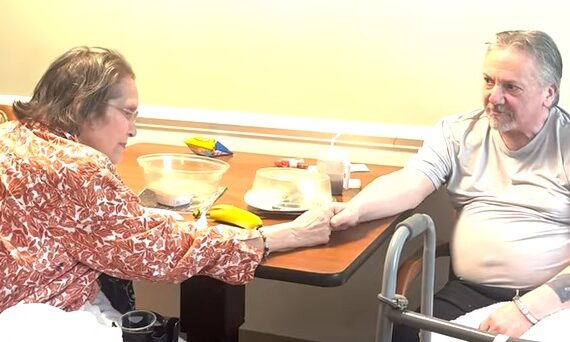



Breaking the Silence: The Fear of Retaliation
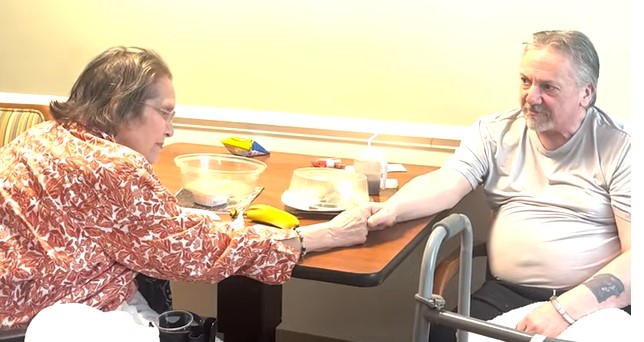
Breaking the Silence: The Fear of Retaliation.
Produced by Peter Sanders. 2026. Running time: 22:10 minutes. Available through the Connecticut Long-Term Care Ombudsman Program. https://www.youtube.com/watch?v=gSizb8ooy9w
Reviewed by: Lydia K. Manning, PhD, MGS, Miami University/Scripps Gerontology Center
Much of life in long-term care homes unfolds through ordinary moments. A resident presses a call light and waits. Someone requests assistance getting dressed. A concern is raised about a medication, a meal, or a preference that has gone unnoticed. Those interactions rarely attract attention because they are embedded in the daily rhythm of institutional life. Yet beneath these seemingly routine exchanges lies the central issue of this film and review: voice in long-term care is fragile and shaped by dependence, vulnerability, and the continual negotiation of being heard.
The ability to express one’s needs, advocate for oneself, or raise a concern is often assumed to be an ordinary aspect of personhood. For individuals whose daily lives and fulfillment of basic care needs depend upon the actions of others, however, voice can become remarkably fragile. When speaking carries even the possibility of negative consequences, silence may appear not as resignation but as an adaptive response to vulnerability. What happens when older adults no longer believe it is safe to use their voice? This question extends beyond whether concerns are reported or complaints are filed. It asks us to consider how fear becomes embedded within everyday care relationships and gradually reshapes decision-making, trust, and agency. When residents, families, or staff remain silent, concerns may go unreported, investigations may be delayed, accountability may diminish, and opportunities to prevent future harm may be lost. In this way, fear of retaliation becomes self-perpetuating, altering not only individuals but also the wider culture of care.
Breaking the Silence: Fear of Retaliation provides an important lens for investigating this phenomenon. Rather than documenting isolated incidents, the documentary illuminates the lived experience of fear through the voices of residents, family members, advocates, and long-term care Ombudsmen. It moves beyond regulatory definitions of retaliation to reveal how fear develops within relationships characterized by profound dependence and an inherent imbalance of power. Power in long-term care homes is rarely addressed. When it is discussed, attention tends to focus on formal authority rather than the subtle interpersonal dynamics through which power is exercised in everyday care. It is embedded in everyday interactions—who answers the call light, who assists with bathing, who administers medications, and who decides whether concerns are acknowledged or dismissed. When one person depends upon another to meet fundamental daily needs, a power asymmetry is unavoidable. The question is not whether power exists, but how it is exercised and whether care environments foster relational safety—the belief that one can express needs, ask difficult questions, refuse unwanted care, or report concerns free of fear of punishment, neglect, or diminished care. Relational safety creates the conditions under which voice, trust, and self-determination remain possible despite dependence.
One of the documentary’s greatest strengths is its refusal to portray residents solely through the lens of vulnerability. Instead, it demonstrates that vulnerability and agency can coexist. Residents describe the difficult and at times excruciating calculus of deciding whether to speak, while family members recount the psychological weight of supporting loved ones without jeopardizing the care they receive. In the film, ombudsmen demonstrate that, when effective, advocacy goes beyond complaint resolution; it involves restoring trust, fostering confidence, and helping residents reclaim their right and capacity to participate in decisions that affect their lives. In this view, empowerment is not independence from others, but the restoration of voice within relationships where fear has disrupted trust.
The residents’ narratives invite a qualitative understanding of retaliation as a lived experience rather than simply a reportable event. Voice emerges not simply as a mechanism for communicating dissatisfaction but as an expression of personhood. To ask for assistance, question a decision, or state a preference is to affirm one’s identity as a person worthy of dignity and respect. Dependence, often understood as a functional limitation, is revealed instead as a profoundly relational experience (Zgola, 1999). Daily well-being depends upon countless interactions with caregivers, each capable of affirming or diminishing one’s dignity.
Perhaps most striking is the film’s portrayal of retaliation through ordinary interactions rather than extraordinary events. Residents describe what might be called quiet indignities or subtle retaliations: unanswered call lights, delayed assistance, dismissive glances, impatient tones, rough transfers, hurried personal care, or the subtle withdrawal of care and respect. Individually, these instances may appear insignificant. Collectively, they communicate whether a resident is regarded as someone worthy of honor and compassionate care. Fear of retaliation is sustained not only through overt punishment but also through the gradual accumulation of routine interactions that quietly erode dignity and discourage voice. The film arrives at an important point in the evolution of long-term care scholarship. Although fear of retaliation has long been recognized in advocacy and regulatory practice, it has only recently begun to receive empirical attention as a phenomenon necessitating empirical attention in research and other projects dedicated to examining it.
Scholarship suggests that fear of retaliation is not simply an individual concern but an organizational one, influencing communication, reporting practices, accountability, and quality of care. Research has documented residents’ fears of reporting concerns and has expanded to examine staff’s fear of retaliation, showing that employees may also remain silent when witnessing resident rights violations due to concerns about personal or professional consequences, such as losing one’s job. For example, Caspi’s work has addressed Ombudsman practice and multiple dimensions of fear of retaliation in long-term care homes (Caspi, 2023, 2024a, 2024b, 2024c, 2026; Long Term Care Community Coalition, 2023). Taken together, these findings show that fear of retaliation reflects organizational cultures that either support or suppress voice. Notably absent from this emerging literature, however, is a systematic examination of family fear of retaliation. Family members featured in the film describe the difficult balance between supporting loved ones and worrying that doing so may unintentionally affect the care those individuals receive. Ombudsmen likewise report encountering these concerns regularly in practice. However, no published empirical study has examined family fear of retaliation in nursing homes. This amounts to a major gap in gerontological research. Families are necessary partners in monitoring care, communicating resident preferences, and supporting quality of life. Understanding how fear shapes family advocacy, trust, and choices deserves focused scholarly attention.
As both a scholarly and educational resource, Breaking the Silence contributes to this emerging conversation by linking empirical research, policy, practice, and lived experience to a central claim: fear of retaliation shapes voice, dignity, and trust in long-term care. It encourages researchers, educators, practitioners, and policymakers to move beyond documenting adverse events toward understanding the relational and organizational conditions that encourage—or undermine—voice, dignity, and trust. The documentary also challenges the field of gerontology to reconsider how voice should be conceptualized within discussions of quality of care. Voice is more than the ability to file a grievance or articulate a preference; it is a fundamental expression of personhood and an important indicator of relational safety. If residents, families, or staff do not believe they can raise concerns without fear of adverse consequences, then person-directed care is incomplete, regardless of existing policies or regulatory protections.
The experiences documented throughout the film also point toward an important agenda for future research. Beyond addressing the lack of research on family fear of retaliation, scholars should move from documenting fear to identifying solutions (Caspi, 2024d; Connecticut Long-Term Care Ombudsman Program [CTLTCOP], 2026). Comparative studies examining nursing homes where residents, families, and staff report relatively low levels of fear alongside organizations where fear is more prevalent could identify leadership practices, communication techniques, staffing approaches, and organizational values associated with cultures of trust and relational safety. Such work would shift the field from describing fear to understanding how organizational cultures that support voice, dignity, and empowerment can be intentionally created and sustained. Futhermore, future research should also extend beyond nursing homes to examine fear of retaliation in assisted living communities. As assisted living continues to expand as a major provider of long-term services and supports, it is important to understand whether residents, family members, and direct care staff experience similar barriers to reporting concerns, rights violations, or mistreatment. Comparative research across residential care settings could illuminate how organizational culture, regulatory oversight, leadership practices, and interpersonal relationships shape psychological safety and the exercise of voice across the continuum of long-term care.
Ultimately, Breaking the Silence reminds us that preserving voice is fundamental to preserving personhood. For older adults living in long-term care homes, the ability to ask for help, communicate concerns, advocate for oneself, and expect to be treated with dignity is not simply a matter of communication—it is an affirmation of one’s humanity. Fear of retaliation threatens each of these. It is also their right under federal nursing home regulations. That is, the right to express voice grievances without fear of retaliation and without retaliation against them. As gerontology continues to advance person-directed care, organizational excellence, and quality improvement, fear of retaliation deserves far greater attention in research, policy, education, and practice. The real measure of an exceptional long-term care community may not simply be whether residents have opportunities to speak, but whether residents, families, and staff alike believe they can use their voices without fear.
Beyond documenting the prevalence and consequences of fear of retaliation, future scholarship should also examine the organizational conditions that either sustain or reduce it. As argued in Caspi’s educational webinar on the administrator’s role in addressing residents’ fear of retaliation, long-term care organizations appear to reflect two contrasting cultures of care: one that intentionally cultivates trust, transparency, and psychological safety so residents, families, and staff feel safe raising concerns, and another in which fear of retaliation becomes normalized, silencing residents and discouraging the reporting of rights violations, neglect, and abuse (Caspi, 2025. Additionally, Caspi (2024e) further illustrates these contrasting cultures of care by distinguishing ineffective, facility-controlled resident councils from independent, resident-led private councils, identifying the structural and procedural characteristics that enable resident voice rather than silence it. Cultivating organizational cultures based on trust, relational safety, dignity, and empowerment is therefore not simply an ethical aspiration—it is essential to the preservation of personhood itself and represents an important step towards re-humanizing America’s long-term care homes.
References
Caspi, E. (2023). Long-term care ombudsman program in United States: Time to establish the program in Israel. Elder Voice Family Advocates.
Caspi, E. (2024a). A bridge over scary water: Ombudsman program strategies and barriers in addressing residents’ fear of retaliation in long-term care homes. Connecticut Long-Term Care Ombudsman Program.
Caspi, E. (2024b). Residents’ fear of retaliation in America’s nursing homes: An exploratory study. Journal of Applied Gerontology, 43(5), 497–514. https://doi.org/10.1177/07334648231214413
Caspi, E. (2024c). They make you pay: How fear of retaliation silences residents in America’s nursing homes. Long Term Care Community Coalition.
Caspi, E. (2024d). A bridge over scary water: Ombudsman program strategies and barriers in addressing residents’ fear of retaliation in long-term care homes. Connecticut Long-Term Care Ombudsman Program.
Moving Forward Coalition. (2024e). Resident council guide. https://irp.cdn-website.com/42d22769/files/uploaded/Resident-Council-Guide_Digital.pdf
Caspi, E. (2025, May 6). Role of administrators in reducing residents’ fear of retaliation in long-term care homes [Webinar]. Elder Voice Advocates. YouTube
Caspi, E. (2026). Nobody spoke up: Staff fear of retaliation in nursing homes. State Investigation Report.
Connecticut Long-Term Care Ombudsman Program. (2026). Breaking the silence: Fear of retaliation training guide. Connecticut Department of Aging and Disability Services.
Long Term Care Community Coalition. (2023). They make you pay: How fear of retaliation silences residents in America’s nursing homes. [Based on research conducted by Eilon Caspi, PhD].
Zgola, J. M. (1999). Care that works: A relationship approach to persons with dementia. Johns Hopkins University Press.
Oxford University Press/The Gerontological Society of America. Reproduced with permission of the author. Originally published in The Gerontologist, July 28, 2026. https://doi.org/10.1093/geront/gnag161